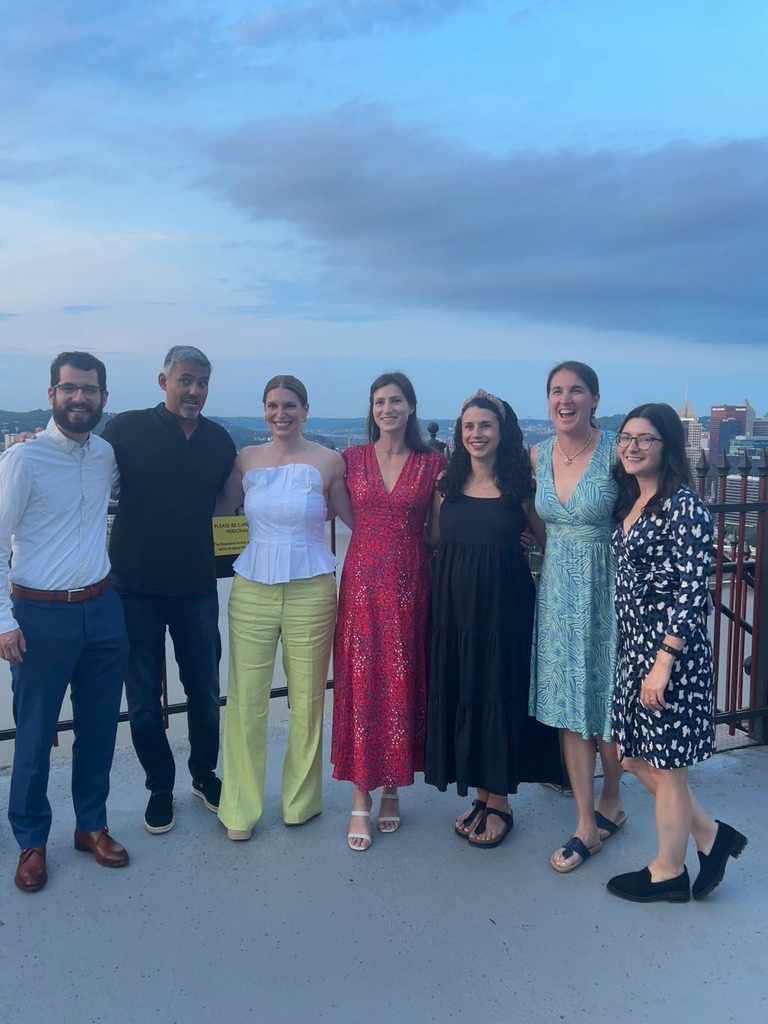
 Fellowship Overview:
The fellowship in Complex Benign Gynecology at UPMC Magee-Womens Hospital is a two-year program set in a busy, tertiary-care, academic teaching hospital. Fellows benefit from the expertise, experience, and surgical volume of faculty members dedicated to minimally invasive surgery, in addition to the research resources and infrastructure provided by the world-renowned Magee-Womens Research Institute (MWRI).
The fellowship is comprised of three main components: clinical, academic and research. During the first year of training, emphasis is on perioperative evaluation, surgical skill acquisition and academic course work. The second year of fellowship provides continued surgical mentorship as well as an opportunity to gain more autonomy by serving as the attending on the resident teaching service with close back-up and support by the fellowship faculty.
Clinical Component:
SURGERY: UPMC Magee-Womens Hospital is a high volume, tertiary care center with a large referral base. Faculty have a total of 10 OR days per week and the fellows participate in every case. The goal is to acquire the advanced surgical skills necessary to safely perform complex laparoscopic gynecologic surgery. Additionally, fellows serve as instructors to the residents in the OR. Over the course of the two years, the fellows will spend on average three days per week in the OR.
Due to the varied backgrounds of the faculty in the CBG program, fellows will graduate well versed in the following procedures:
Laparoscopy
- Hysterectomy (total, supracervical and modified radical)
- Myomectomy
- Excision of endometriosis (including bowel/bladder surgery and a standardized approach to the frozen pelvis)
- Retroperitoneal dissection including ureterolysis and development of avascular spaces of the pelvis
- Presacral neurectomy
- Infertility (fimbrioplasty)
- Treatment of Mullerian anomalies
- Radiofrequency Ablation for treatment of Fibroids
Robotics
- Fellows will rotate at the UPMC Pinnacle for 6 weeks each year. This rotation is with 4 high volume fellowship trained robotics surgeons and will concentrate on complex gynecologic procedures (endometriosis, fibroids, etc.).
- Fellows will graduate certified in robotics surgery.
Hysteroscopy
- Resection of submucosal fibroids
- Endometrial Ablation
- Synechiolysis
FACULTY OFFICES: The CBG group has a large referral practice, and under the guidance of a faculty member, fellows see new patients referred for surgery. The focus of these office sessions is on preoperative evaluation and decision-making. Further, division members staff the Fibroid Treatment Center as well as the Endometriosis/Chronic Pelvic Pain Center, which offer education in the multidisciplinary approach to care of these complex conditions. At the completion of their training, fellows will be proficient in the evaluation of chronic pelvic pain/endometriosis, fibroids, adnexal masses and abnormal uterine bleeding.
INDEPENDENT OFFICE EXPERIENCES: The fellows see patients independently in the Complex Benign Gynecology clinic. This is an opportunity for the fellows to gain autonomy in the evaluation of common ambulatory gynecologic conditions and become comfortable with the process of perioperative decision-making, planning and counseling. The fellows also serve as attendings in the acute gynecology clinic a subspecialty clinic within the general academic OB/GYN offices for evaluation and treatment of acute gynecologic conditions.
CALL: The fellows take pager call for patients of the complex benign gynecology division and occasional in-house call for the academic gynecology practice patients. There are no call or clinical responsibilities for obstetrical patients.
MOONLIGHTING: Fellows have an opportunity to moonlight in both gynecology and obstetrics at various UPMC facilities. This is not a requirement and should not interfere with fellowship duties.
Academic Component
COURSE WORK: The fellowship collaborates with the University of Pittsburgh where fellows complete REACH, an 8-week program teaches fundamental skills of clinical research to physicians in UPMC-affiliated residency and fellowship programs. REACH is offered by the Institute for Clinical Research Education (ICRE). REACH is ideally suited for medical professionals interested in participating in clinical research studies as an active member of a research team, or in gaining a better understanding of clinical research. With only a 2-month commitment (July–August), REACH delivers essential clinical research skills via high-quality courses taught by the ICRE’s world-class faculty. Further information on the program can be found here.
RESIDENT EDUCATION: During their second year, fellows serve as the primary teaching attending 2-4 days per month. During this time, they round on the inpatient service and perform surgery with residents as their first assist. The fellows also oversee the longitudinal laparoscopic simulation curriculum, ultimately preparing the residents for their EMIG exam. The fellows are responsible for the monthly CBG conference (inclusive of case presentations, in-depth discussion of various MIS-related topics, and surgical tutorials). The fellows also run a chicken lab every 5 weeks, which allows the fellows and residents to review laparoscopic skills in a realistic setting.
Research Component
Fellows have an average of one protected research day per week. Every fellow is expected to publish an IRB-approved research study, as per AAGL FMIGS program guidelines. Additionally, they will learn how to prepare and present videos at national conferences. Through our association with the Magee-Womens Research Institute (MWRI) and our extensive patient database, the fellow will be able to design and execute prospective and retrospective studies under the mentorship of the program faculty.
Meet our Current Fellows:
Meet our Faculty:
Faculty at UPMC Pinnacle (Robotics Rotation)
- Timothy Deimling
- Gerald Harkins
- Andrea Benton
- Gretchen Makai
Interview Process
Applications for our Complex Benign Gynecology fellowship can be submitted via AAGL. Full application detail can be found on the AAGL website https://aagl.org/cbgf/applications/. Applications for the 2026-2027 academic year are due to AAGL by May 1st, 2026 and interviews will be held on June 17th, 2026. Please visit AAGL's Apply to Program page for more information.
Application Schedule
May 1, 2026: Deadline to Submit Applications
May 1, 2026: Application Distribution to Programs
May 22, 2026: First Wave of Interview Notifications
June 1, 2026: Deadline for Candidates to Accept/Decline Interview Invitation
June 2, 2026: Second Wave of Interview Notifications
After you interview please register on the NRMP website.
For more information, please contact:
Suketu Mansuria, M.D., Fellowship Director
Associate Professor
Assistant Director of Gynecologic
Complex Benign Gynecology
Magee-Womens Hospital
University of Pittsburgh Medical Center
UPMC Magee-Women’s Hospital
300 Halket Street
Pittsburgh, PA 15213
Tel: (412) 641-8769
Fax: (412) 641-1133
Email:manssm@upmc.edu
Or visit the AAGL Website.